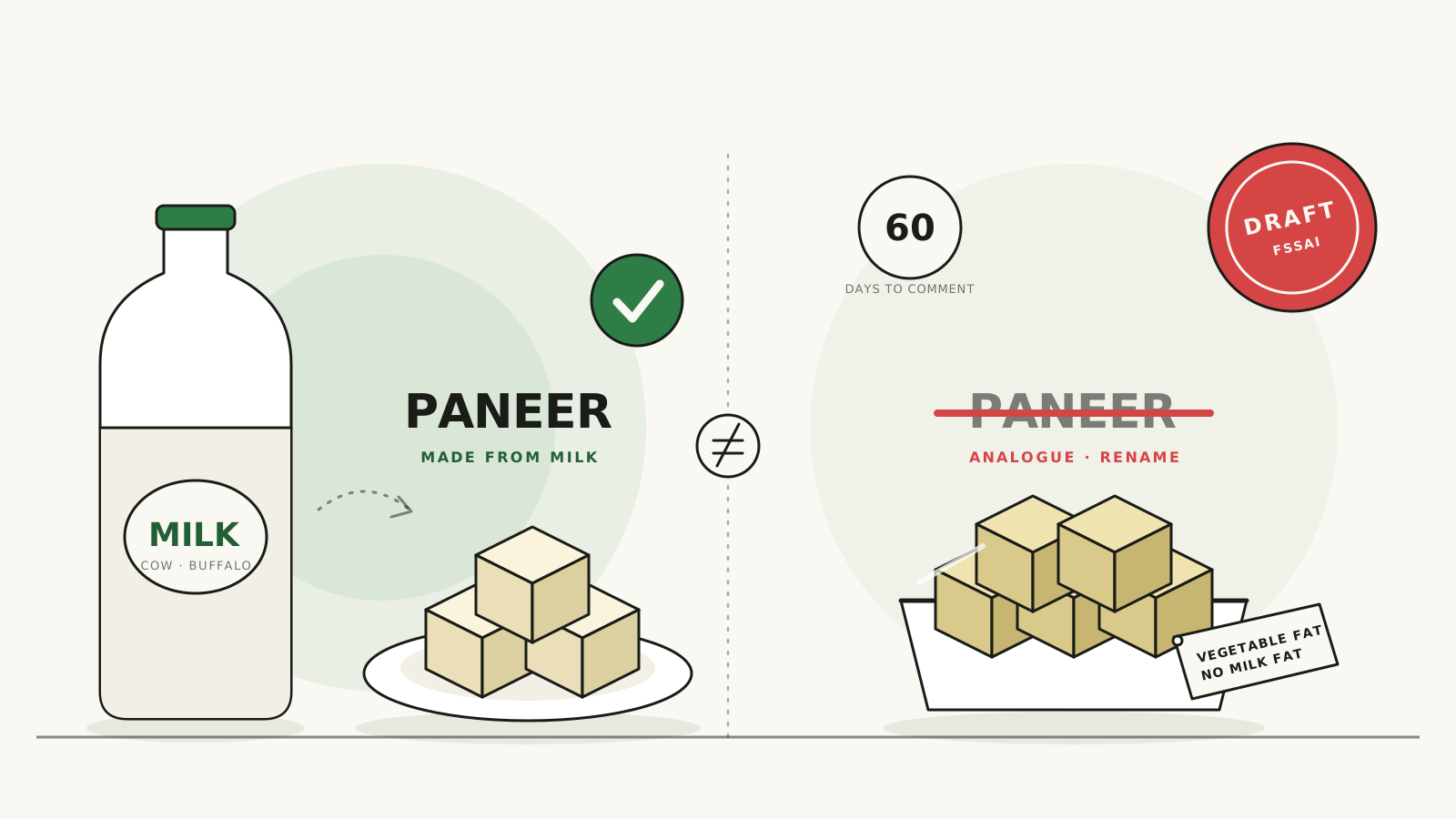
If your product doesn't come from milk, FSSAI doesn't want you calling it paneer anymore, and it's putting that into a formal draft notification. This week, the regulator proposed an amendment to the Food Safety and Standards (Prohibition and Restrictions on Sales) Regulations, 2011, that would bar any product made without milk-derived ingredients from using "paneer" anywhere in its name, label, or marketing. Products already licensed under FSSAI's "Analogue in Dairy Context" category would have to drop the word entirely. For a country where paneer sits in everything from restaurant menus to hostel mess counters to packaged frozen food, that's a labelling change with real reach.
Background: A Definition Fight Years in the Making
The draft notification, issued around September 22 and 23, proposes defining paneer specifically as a milk-based product, one obtained from cow or buffalo milk, or a combination of the two, through precipitation using permitted acidulants, with milk solids also allowed in preparation. That sounds technical, but it matters because "analogue paneer," made by substituting vegetable fat or other non-dairy ingredients for milk fat while keeping a similar texture and appearance, has been sold under the paneer name for years, particularly in food service and low-cost catering.
FSSAI isn't starting from zero here. Its West Region office reportedly directed food businesses in April 2026 to stop selling cheese analogues as paneer, treating it as a labelling violation even before any formal amendment existed. State regulators have also moved independently: Karnataka and Telangana have reportedly each implemented one-year restrictions on analogue paneer sales in their states over the past two months, ahead of any central rule. This draft notification is FSSAI's attempt to standardise that patchwork into one national rule.
What Changes, and Who It Affects
The core of the proposal is straightforward: if it isn't made from milk, it can't be called paneer, on the pack, on the menu, or in marketing. FSSAI's own quoted language in the notification is direct on this point:
That means an immediate renaming exercise for any business currently selling a non-dairy paneer substitute, whether it's a packaged frozen product, a restaurant-supplied bulk ingredient, or a quick-commerce grocery item. This lands hardest on three groups.
- Manufacturers of vegetable-fat-based paneer substitutes, often sold at a lower price point to institutional caterers, hostels, and budget restaurants, need a new product name and updated packaging before the rule takes effect.
- Restaurants and food service operators who currently use analogue paneer without disclosing it to customers face a bigger reputational and legal exposure once the definitional line is drawn clearly in regulation rather than left to interpretation.
- Genuine dairy paneer manufacturers stand to benefit from a clearer market boundary, since a formally defined "paneer" standard makes it easier to challenge mislabelled competitors instead of relying on ad hoc state directives.
The Compliance Window and What's Still Open
This is a draft, not a final regulation, and FSSAI has opened it for public comment, with 60 days from when copies of the notification become publicly available for stakeholders to submit objections and suggestions to the FSSAI Chief Executive Officer. That's a genuine opportunity for affected manufacturers, dairy federations, and industry associations to push back on specific provisions, whether on the definition itself, the transition timeline, or how existing licensed stock gets treated.
What the current draft doesn't spell out, at least publicly, is a specific penalty structure for non-compliance or a hard compliance deadline once the rule is finalised, so businesses in this category should watch for the final gazette notification closely rather than assuming the draft language is the last word.
Your Compliance Checklist
- Identify if you fall under "Analogue in Dairy Context." Check your existing FSSAI license category now, since this is the specific classification the draft notification targets directly.
- Start renaming and repackaging early. A full label change, especially across multiple SKUs or private-label contracts, takes longer than most businesses expect, so don't wait for the final notification to begin.
- Review your ingredient declarations against the new paneer definition. If your product uses vegetable fat or non-dairy solids in place of milk fat, the current draft would require you to stop calling it paneer regardless of how similar it looks or tastes.
- Flag this to your food service and catering customers. If you supply bulk analogue paneer to restaurants, hostels, or institutional kitchens, they'll need advance notice to update their own menus and disclosures.
- Submit comments during the 60-day window if the rule affects you. This is the formal channel to raise industry concerns before the definition and timeline are locked in through the final notification.
Why This Is Worth Acting on Before It's Final
State-level bans in Karnataka and Telangana, plus FSSAI's own West Region directive from earlier this year, show the direction of travel is already set, regardless of exactly when the central rule is finalised. Waiting for the final gazette notification before starting a rename and repackaging process means compressing months of work into whatever transition window FSSAI eventually allows, likely under pressure from a regulator that has already shown it's willing to act region by region while the national rule catches up. Businesses that treat the 60-day comment period as their planning window, not just their objection window, will be in a stronger position than those that wait.
How FoodOS360 Can Help
Keeping product classifications aligned with shifting FSSAI category definitions, like where a product sits under "Analogue in Dairy Context," is exactly the kind of detail that's easy to miss until a draft notification changes the rules on you. FoodOS360 tracks your license categories against incoming regulatory changes, flags products that would need relabelling under a proposed amendment like this one, and keeps your compliance team updated as draft notifications move toward final rules, so a naming change doesn't become a scramble.
Conclusion
FSSAI's draft notification on analogue paneer closes a definitional gap that state regulators had already started filling on their own. Manufacturers and food service businesses using non-dairy paneer substitutes have a real but limited window to prepare before this becomes final.
This article is meant for general information and isn't legal advice. Talk to a qualified food law professional before making labelling decisions based on this evolving amendment.